Description
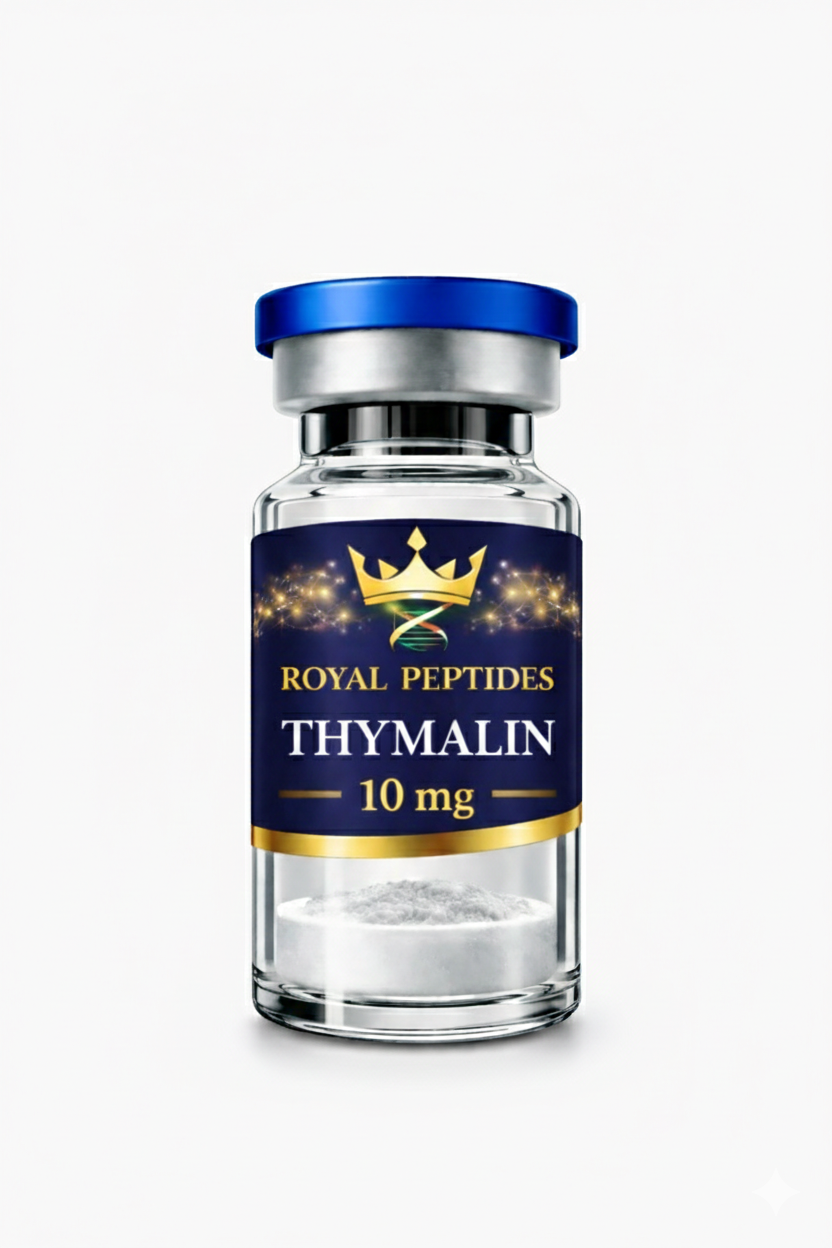
Thymalin – a research peptide complex focused on immunological regulation and T-lymphocyte differentiation
Thymalin is a low-molecular-weight peptide complex derived from thymic tissue, intended for experimental and preclinical research models in the fields of immunology, cellular signaling, and gene expression regulation. It represents a group of biologically active peptide fractions studied primarily in the context of adaptive immune response modulation and functional regulation of T-lymphocytes.
Under experimental conditions, Thymalin is investigated as a regulatory factor capable of influencing differentiation, maturation, and functional activity of immune system cells.
Why Thymalin Is a Subject of Research
Thymalin enables researchers to analyze mechanisms of immune regulation at the level of cellular signaling and gene expression. It is primarily studied in relation to:
• differentiation and maturation of T-lymphocytes
• regulation of adaptive immune response
• modulation of gene expression in immune cells
• cellular proliferation and apoptotic processes
• interaction between the thymus and peripheral immune tissues
• mechanisms of immunological homeostasis
In experimental models, it serves as a research tool for studying regulatory processes occurring within both central and peripheral components of the immune system.
Mechanism of Action (Research Context)
Thymalin is studied as a complex of biologically active peptides capable of influencing regulatory gene expression and intracellular signaling pathways in immune cells. Its effects are believed to be mediated through interaction with nuclear and cytoplasmic regulatory mechanisms involved in cell cycle control and cellular differentiation.
Laboratory studies suggest that thymic peptide fractions may influence:
• gene expression involved in immune response regulation
• proliferation and differentiation of T-lymphocyte populations
• balance between pro-inflammatory and regulatory signaling
• apoptotic and adaptive cellular mechanisms
• maintenance of immune homeostasis in experimental models
These mechanisms are significant for understanding molecular regulation of adaptive immunity.
Areas of Research Application
Thymalin is primarily utilized in:
• experimental immunology
• cellular biology of T-lymphocytes
• studies of thymic regulation of immunity
• gene expression research in immune cells
• models of immune dysregulation
• research related to immune system aging
Research Background and Scientific References
Research on thymic peptides is supported by broader scientific knowledge in immune regulation:
1️⃣ Goldstein A.L.
Thymosin and thymic peptides in immune regulation
Annals of the New York Academy of Sciences
→ Role of thymic peptides in immune regulation.
2️⃣ Khavinson V. et al.
Peptide regulation of gene expression and aging
Neuroendocrinology Letters
→ Regulatory peptides and their influence on gene expression.
3️⃣ Experimental models of thymic regulation
Studies focused on T-cell differentiation and immune homeostasis.
Safety and Regulatory Information
⚠️ Important Notice:
Thymalin is intended strictly for laboratory and research purposes.
It is not approved as a medicinal product.
It is not intended for human or veterinary use.
It is not intended for consumption or clinical applications.
The product is distributed exclusively for research institutions, laboratories, and professional experimental
All products available in our offer are intended strictly for research, laboratory, and development purposes only. They are not intended for use as a medicinal product, medical device, cosmetic product, food, dietary supplement, or as an active substance intended for consumption or application in humans or animals.
These products are not approved for clinical use and must not be used for the diagnosis, treatment, or prevention of any disease.
By purchasing the product, the customer acknowledges and confirms understanding of its research nature and agrees to use it exclusively in accordance with this intended purpose.
The purchase of our products is permitted only to individuals over 18 years of age.
Product images are for illustrative purposes only. The actual appearance of the packaging may vary depending on the current batch.