Description
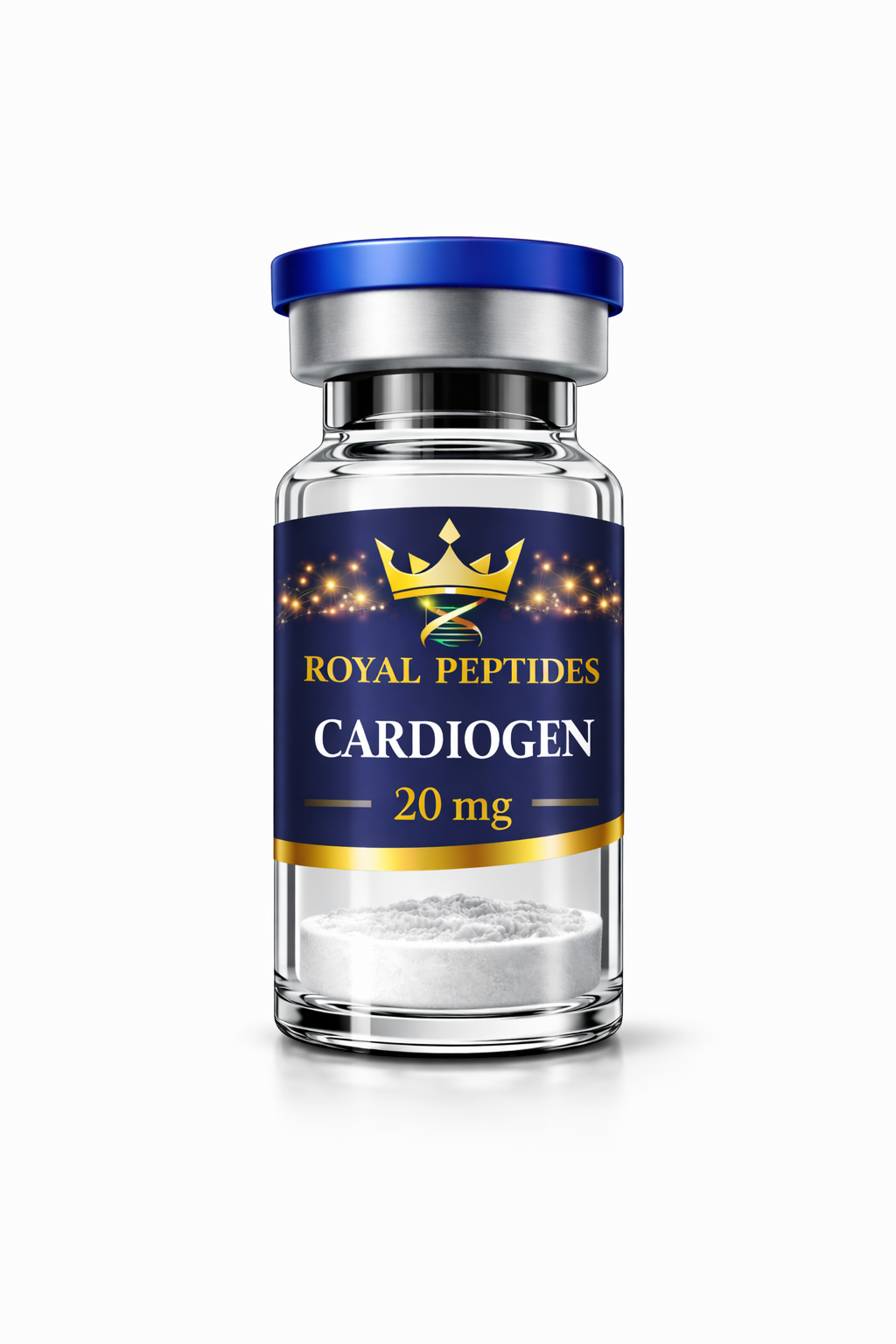
Cardiogen – Research Peptide Complex Focused on Cardiovascular Regulation
Cardiogen is a synthetic peptide complex intended for experimental and preclinical models focused on myocardial cellular regulation, cardiovascular physiology, and molecular mechanisms influencing cardiac tissue function. It belongs to the class of low-molecular-weight regulatory peptides investigated in the field of cellular signaling, gene expression, and metabolic activity of cardiomyocytes.
In research settings, Cardiogen is of particular interest in the regulation of cardiac contractile function, cellular adaptation to metabolic stress, and mechanisms responsible for maintaining structural integrity of the myocardium.
Why Cardiogen Is Studied
Cardiogen enables researchers to analyze several biological processes, particularly:
• regulation of gene expression in cardiomyocytes
• mechanisms of cellular adaptation to hypoxia and metabolic stress
• signaling pathways associated with cardiac contractile function
• metabolic processes occurring in cardiac tissue
• interaction between mitochondrial function and myocardial energy demand
Mechanism of Action (Research Context)
In experimental models, Cardiogen is investigated as a regulatory peptide capable of modulating cellular signaling and gene expression in cardiac tissue. Its activity is presumed to be mediated through interaction with intracellular regulatory mechanisms influencing metabolic activity and stability of cellular structures.
Laboratory studies suggest that peptide complexes of this type may influence:
• synthesis of proteins involved in the contractile apparatus
• regulation of oxidative stress in cardiomyocytes
• mitochondrial bioenergetics
• apoptotic and adaptive cellular pathways
• maintenance of myocardial structural integrity
These mechanisms are relevant for understanding molecular regulation of cardiac function under experimental conditions.
Research Applications
Cardiogen is primarily used in the following research areas:
• cardiovascular physiology research
• cardiomyocyte cellular biology
• experimental models of myocardial metabolic adaptation
• molecular regulation of contractile function
• mitochondrial bioenergetics of cardiac tissue
Scientific Background and References
The application of regulatory peptides in cardiac research is based on broader scientific knowledge of cellular signaling and myocardial regulation:
1️⃣ Olson E.N.
Gene regulatory networks in the evolution and development of the heart
Science, 2006
→ Mechanisms of gene regulation in cardiac tissue.
2️⃣ Dorn G.W.
Mitochondrial dynamics in heart disease
Biochimica et Biophysica Acta, 2013
→ Role of mitochondria in myocardial functional regulation.
3️⃣ Heusch G.
The coronary circulation as a target of cardioprotection
Circulation Research, 2016
→ Mechanisms of cardiac tissue adaptation to stress stimuli.
4️⃣ Preclinical and in vitro models
Studies focused on cellular signaling, gene expression, and metabolic regulation in cardiomyocytes.
Safety and Regulatory Information
⚠️ Important Notice:
Cardiogen is intended strictly for laboratory and research purposes only.
It is not approved as a medicinal product.
It is not intended for human or veterinary use.
It is not intended for consumption or clinical application.
The product is distributed exclusively to research institutions, laboratories, and for professional experimental use only.
All products available in our offer are intended strictly for research, laboratory, and development purposes only. They are not intended for use as a medicinal product, medical device, cosmetic product, food, dietary supplement, or as an active substance intended for consumption or application in humans or animals.
These products are not approved for clinical use and must not be used for the diagnosis, treatment, or prevention of any disease.
By purchasing the product, the customer acknowledges and confirms understanding of its research nature and agrees to use it exclusively in accordance with this intended purpose.
The purchase of our products is permitted only to individuals over 18 years of age.
Product images are for illustrative purposes only. The actual appearance of the packaging may vary depending on the current batch.