Description
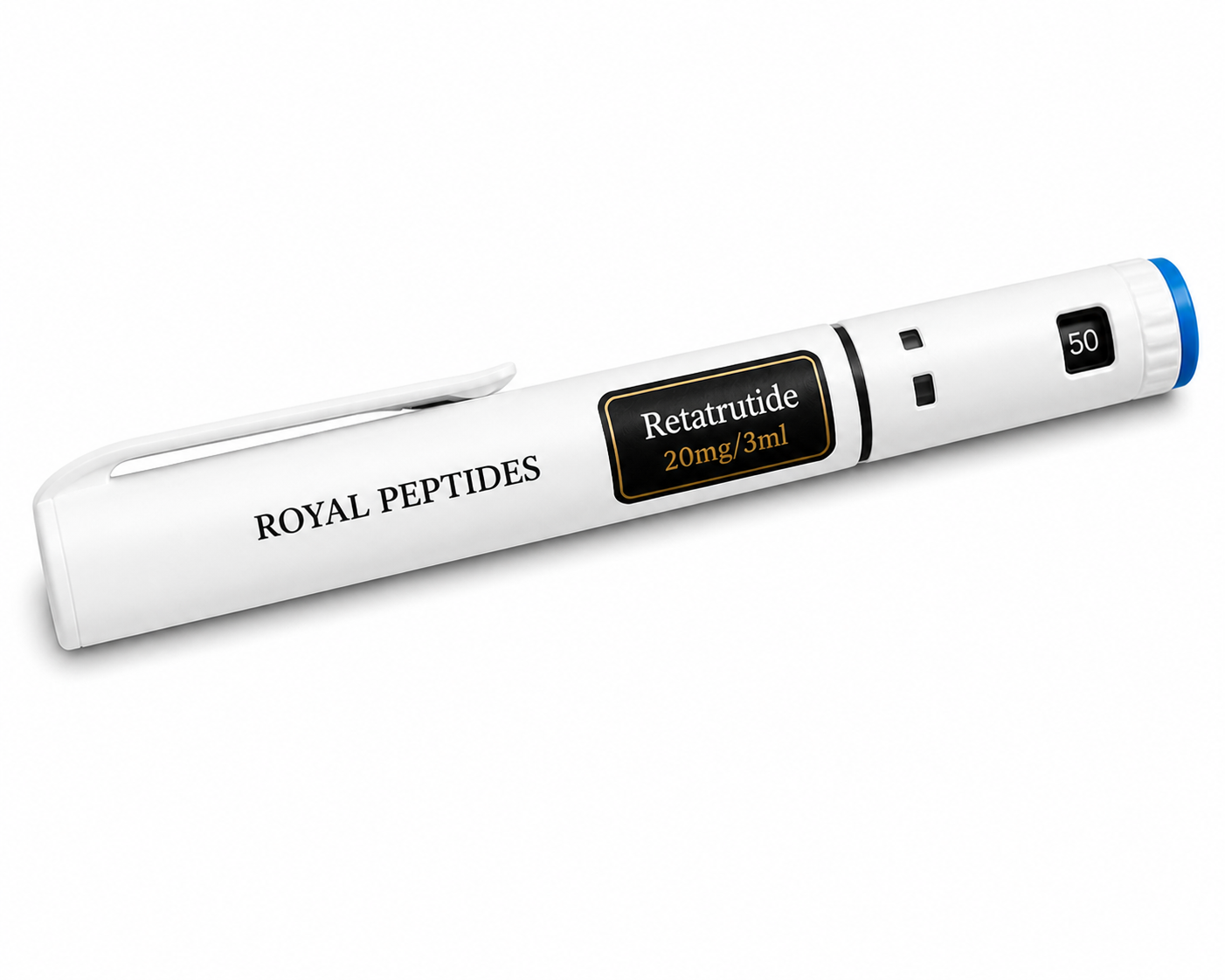
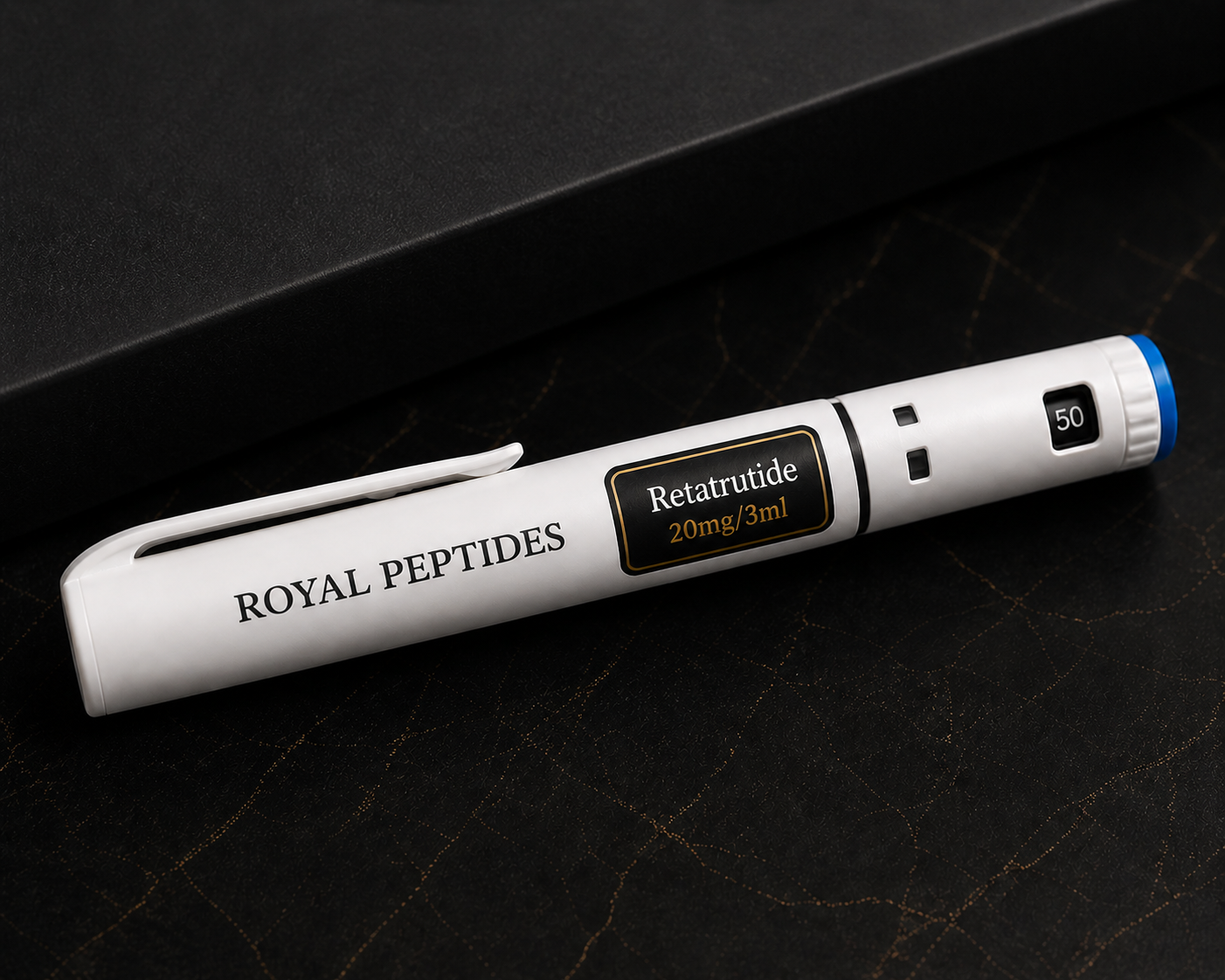
Retatrutide – dosing pen 20mg/3ml
Retatrutide is an experimental peptide compound that is the subject of intensive scientific research for its potential effects on body weight regulation, metabolism, and energy balance. It acts as a multi-agonist of receptors (GLP-1, GIP, and glucagon), thereby affecting multiple metabolic pathways simultaneously – including appetite regulation, glucose processing, and the use of fats as an energy source.
The dosing pen contains 20 mg of the active substance in 3 ml of solution, representing a concentration of approximately 6.6 mg/ml. In terms of dosing:
1 ml = 100 units (UI) = 100 clicks, while the pen has 50 clicks per one full rotation (0.5 ml).
This means that, for example:
10 clicks ≈ 0.6 mg
20 clicks ≈ 1.2 mg
50 clicks (full rotation) ≈ 3.3 mg
This system enables precise and flexible dosing according to the needs of the research protocol.
Effects studied in research
Retatrutide is one of the most advanced compounds in the field of metabolic research. By combining effects on multiple hormonal receptors, it may influence satiety, energy expenditure, and the metabolic efficiency of the body. Activation of GLP-1 and GIP receptors is associated with reduced food intake and improved glucose regulation, while the effect on the glucagon receptor may support increased energy expenditure.
Research suggests that this combination of mechanisms may lead to more significant metabolic changes compared to traditional approaches focused on only one receptor. Retatrutide is therefore being studied primarily in the areas of obesity, metabolic syndrome, and optimization of energy balance.
Scientific context and sources
Retatrutide (LY3437943) was developed by Eli Lilly and Company
and is the subject of clinical research within Phase II studies focused on obesity and metabolic diseases. Results published in the The New England Journal of Medicine indicate significant reductions in body weight and improvements in metabolic parameters among the studied subjects. The mechanism of action is based on the combined activation of GLP-1, GIP, and glucagon receptors, representing a new approach in the field of so-called “triple agonist” therapies.
Additional findings come from preclinical and clinical studies available in databases such as PubMed
and ClinicalTrials.gov
, where effects on energy expenditure, glycemic control, and lipid metabolism are being monitored. These studies suggest that the combined effect on multiple hormonal pathways may provide a more comprehensive approach to metabolic regulation compared to single-target compounds.
The Royal Peptides dosing pen offers a modern, precise, and practical solution for handling this compound in laboratory conditions, while allowing easy dose adjustment through a click-based mechanism.
The product is intended exclusively for scientific purposes.
All products available in our offer are intended strictly for research, laboratory, and development purposes only. They are not intended for use as a medicinal product, medical device, cosmetic product, food, dietary supplement, or as an active substance intended for consumption or application in humans or animals.
These products are not approved for clinical use and must not be used for the diagnosis, treatment, or prevention of any disease.
By purchasing the product, the customer acknowledges and confirms understanding of its research nature and agrees to use it exclusively in accordance with this intended purpose.
The purchase of our products is permitted only to individuals over 18 years of age.
Product images are for illustrative purposes only. The actual appearance of the packaging may vary depending on the current batch.