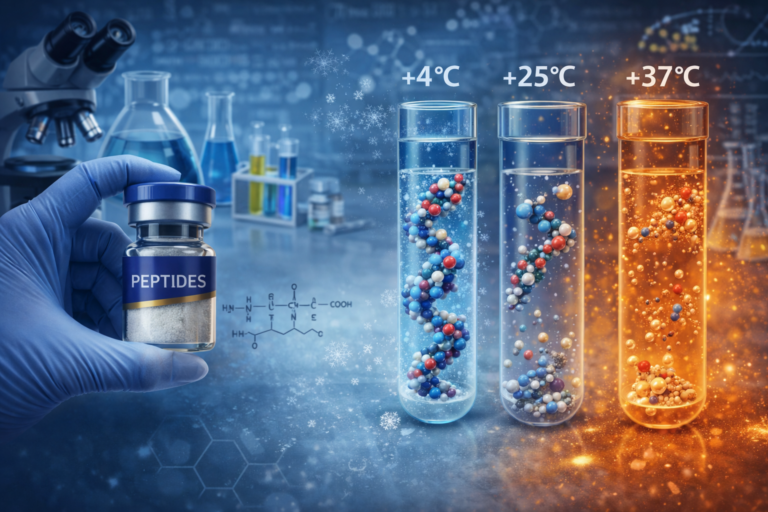
Peptides today are not only tools of modern medicine, cosmetics, or scientific research. Their biological effectiveness and ability to modulate physiological processes also make them attractive for misuse. From sports doping, through illegal wellness products, to experimental self-treatment practices — wherever the goal is a rapid effect, peptides may be used inappropriately. This article focuses on the places and forms of peptide misuse, the reasons behind counterfeiting, associated risks, and the need for strict testing.
Why Peptides Are Misused
The main reason for peptide misuse is their strong biological effect on the human body. Some molecules can:
- increase the production of growth hormone
- improve tissue regeneration
- support metabolism or fat reduction
- stimulate muscle growth
This potential particularly attracts:
- athletes and bodybuilders seeking rapid performance enhancement
- appearance- and wellness-oriented individuals aiming to quickly reduce fat or improve skin condition
- experimenters testing peptides outside clinical studies
Misuse often stems from the desire for immediate results, regardless of safety or legal frameworks.
Places and Forms of Misuse
Sports and Doping
- Peptides such as GHRP-2, GHRP-6, and CJC-1295 stimulate the release of growth hormone.
- They are illegally used to increase muscle mass, strength, and recovery.
- International anti-doping organizations (WADA) ban many peptides.
- Consequences: athletes risk disqualification, health damage, and legal penalties.
Illegal Supplements and Wellness Products
- Some products on the market contain peptides that have not been clinically tested.
- These are often purchased online from unverified sources.
- Many of these peptides are counterfeit or contaminated, increasing health risks.
Experimental Self-Treatment Practices
- Some individuals experiment with peptides on their own — for example through injections or subcutaneous applications.
- Without proper dosing and monitoring, this can lead to hormonal imbalance, metabolic complications, or infections.
Peptide Counterfeiting
Peptide counterfeiting is a problem closely linked to illegal sales:
- Why they are counterfeited: the high price and demand for active substances motivate manufacturers of illegal products.
- How they are counterfeited: some products contain ineffective molecules, contaminated chemicals, or entirely different peptides disguised as legitimate products.
- Consequences of counterfeiting: health risks ranging from allergies and infections to hormonal disorders.
Counterfeiting is not merely an economic fraud but a real health threat, because consumers often do not know exactly what they are administering.
Risks of Peptide Misuse
Health Risks
- Hormonal imbalance – excessive stimulation of growth hormone or insulin pathways
- Metabolic disorders – changes in glucose and lipid levels
- Organ damage – liver, kidneys, heart
- Infections and contamination – especially with injectable products from unverified sources
Psychological and Social Risks
- dependence on rapid results
- damage to reputation (especially among athletes)
- legal consequences
Long-Term and Unpredictable Effects
- Not all effects of misused peptides are known.
- Insufficient testing may lead to long-term health complications that appear years after application.
Why Peptide Testing Is Essential
- Confirmation of molecular identity: ensuring that the peptide being applied is exactly what the manufacturer declares.
- Purity determination: peptides often degrade or may contain by-products from synthesis.
- Dosing safety: proper dosage is essential to prevent toxic effects.
- Regulatory compliance: production under GMP standards ensures reproducibility and safety for clinical or commercial use.
Without proper testing, any product may be dangerous, counterfeit, or ineffective.
Education and Prevention
- Users should be informed about the risks of illegal peptide products.
- Athletes should follow the WADA list of prohibited substances.
- Physicians and pharmacists can provide guidance and supervision for peptide applications in a safe, clinically validated context.
Preventing misuse is just as important as regulating production.
Conclusion
Peptides are powerful molecules with the potential to improve lives — from disease treatment and tissue regeneration to cosmetic applications. However, this potential also attracts misuse, especially where the desire for rapid results outweighs respect for science and safety. Counterfeiting, illegal sales, and unsupervised experimentation pose real health and legal risks.
For this reason, testing, regulation, and education are essential. Peptides must remain tools in the hands of scientists and healthcare professionals, not objects of reckless experimentation. The responsibility of every user and producer can determine whether these molecules improve lives or endanger health.
Sources
- Nelson & Cox — Lehninger Principles of Biochemistry
- Alberts et al. — Molecular Biology of the Cell
- WADA — World Anti-Doping Agency Prohibited List
- Fosgerau & Hoffmann — Peptide therapeutics: current status and future directions (Drug Discovery Today)
- Hancock REW — Host defense peptides (Nature Biotechnology)
- EMA — Guideline on Good Manufacturing Practice for Peptide Medicinal Products