Description
BPC-157 – Dosing Pen 10mg/2ml (Advanced Tissue Repair & Cytoprotective Peptide)
BPC-157 (Body Protection Compound-157) is a sequence composed of 15 amino acids that represents a partial structure of a naturally occurring protective peptide found in human gastric juice. In the scientific community and biomedical research, this molecule is considered one of the most powerful regenerative factors ever isolated. It exhibits exceptional stability against enzymatic degradation, allowing it to initiate profound regenerative processes throughout the entire body. Research is primarily focused on its ability to reconstruct damaged tissues and maintain cellular homeostasis even under extremely adverse conditions.
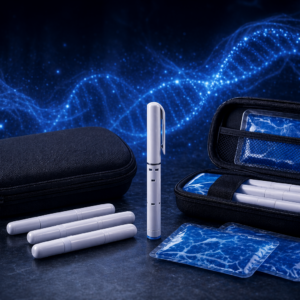
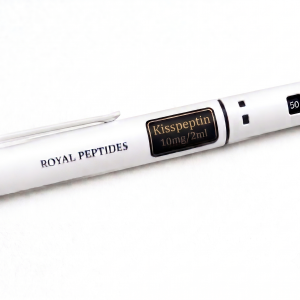
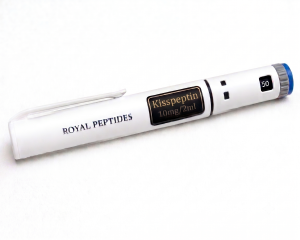
The dosing pen contains 10 mg of highly purified active substance in 2 ml of solution, corresponding to a concentration of exactly 5 mg/ml. Calculated for precise dosing within research protocols:
1 ml = 100 units (UI) = 100 clicks
0.5 ml (one full rotation of the mechanism) = 50 clicks
Examples of dosing for research purposes:
1 click = 0.05 mg (50 mcg) of active substance
2 clicks = 0.10 mg (100 mcg) of active substance
5 clicks (0.05 ml) = 0.25 mg (250 mcg) of active substance
10 clicks (0.1 ml) = 0.50 mg (500 mcg) of active substance
20 clicks (0.2 ml) = 1.00 mg (1000 mcg) of active substance
This mechanical system ensures absolute precision, repeatability, and flexibility when setting microdoses according to the requirements of a specific laboratory protocol, eliminating the need for complex and inaccurate manual dilution.
Effects Investigated by Research
The key mechanism of action of BPC-157 currently being intensively investigated is the upregulation of growth factors, particularly EGR-1 (Early Growth Response 1) and VEGFR2 (Vascular Endothelial Growth Factor Receptor 2). This process stimulates powerful angiogenesis—the formation of new capillaries and microvessels. Increased neovascularization dramatically accelerates the delivery of oxygen and structural nutrients to bradytrophic tissues (tissues with low blood supply, such as tendons, cartilage, and ligaments), which normally heal extremely slowly.
In in vivo models, BPC-157 has demonstrated the ability to accelerate the healing of ruptured Achilles tendons, damaged muscle fibers, and bone fractures. The second major pillar of research is gastrointestinal cytoprotection. The peptide has demonstrated the ability to heal the lining of the stomach and intestines, suppress inflammation associated with Crohn’s disease, ulcerative colitis, and the so-called Leaky Gut syndrome. At the same time, its hepatoprotective effects (liver protection), ability to stabilize blood pressure, and neuroprotective potential in restoring damaged neural pathways are also being investigated.
Scientific Context and References
Thanks to its enormous therapeutic potential, BPC-157 has been the subject of hundreds of scientific publications in respected medical journals worldwide. These studies are fully available in the international PubMed database, where research teams thoroughly examine its interaction with nitric oxide (NO) and reparative fibroblasts.
Detailed data regarding the molecule’s stability in the gastric environment and its systemic anti-inflammatory effects are continuously being added to the ClinicalTrials.gov databases, where this compound serves as a key model for the development of new approaches in regenerative medicine, traumatology, and gastroenterology.
The Royal Peptides dosing pen provides a modern, safe, and highly sterile solution for handling this advanced molecule under controlled laboratory conditions.
The product is intended exclusively for scientific and research purposes. Not for direct human consumption.
All products available in our offer are intended strictly for research, laboratory, and development purposes only. They are not intended for use as a medicinal product, medical device, cosmetic product, food, dietary supplement, or as an active substance intended for consumption or application in humans or animals.
These products are not approved for clinical use and must not be used for the diagnosis, treatment, or prevention of any disease.
By purchasing the product, the customer acknowledges and confirms understanding of its research nature and agrees to use it exclusively in accordance with this intended purpose.
The purchase of our products is permitted only to individuals over 18 years of age.
Product images are for illustrative purposes only. The actual appearance of the packaging may vary depending on the current batch.