Description
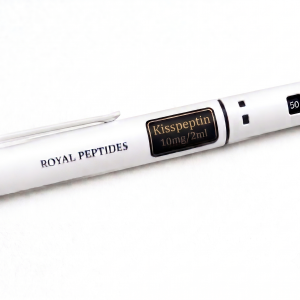
TB-500 – Dosing Pen 10mg/2ml (Systemic Tissue Regeneration Peptide)
TB-500 is a synthetic sequence fragment (containing the active 43-amino-acid region) of the naturally occurring protein Thymosin Beta-4, which is produced by the cellular structures of the thymus and other tissues in response to injury. In the field of regenerative medicine and biomedical research, this compound is considered one of the most significant molecules influencing cellular mobility. Due to its low molecular weight, TB-500 readily penetrates tissue barriers and exhibits a powerful systemic effect—meaning that once introduced into a research model, it can actively locate and repair damaged sites regardless of the site of administration.
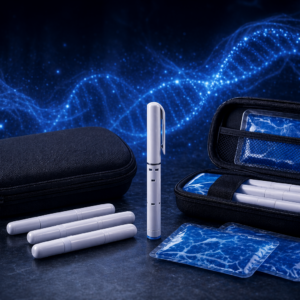
The dosing pen contains 10 mg of highly purified active substance in 2 ml of solution, corresponding to a concentration of exactly 5 mg/ml. For precise dosing within research protocols:
1 ml = 100 units (IU) = 100 clicks
0.5 ml (one full rotation of the mechanism) = 50 clicks
Examples of dosing for research purposes:
1 click = 0.05 mg (50 mcg) of active substance
2 clicks = 0.10 mg (1000 mcg = 100 mcg) of active substance
10 clicks (0.1 ml) = 0.50 mg (500 mcg) of active substance
20 clicks (0.2 ml) = 1.00 mg (1000 mcg) of active substance
40 clicks (0.4 ml) = 2.00 mg (2000 mcg) of active substance
50 clicks (0.5 ml / one full rotation) = 2.50 mg (2500 mcg) of active substance
This mechanical system guarantees absolute precision, repeatability, and flexibility when setting microdoses according to the requirements of a specific laboratory protocol, without the risk of contamination or the need for complex manual dilution.
Effects Investigated in Research
The primary mechanism of action of TB-500 is its ability to upregulate actin, a key structural cellular protein responsible for cell contractility and movement. Actin forms the cytoskeleton, and its optimal levels allow reparative cells to rapidly migrate directly to the site of injury, where they initiate immediate regenerative processes.
The second key area of research is the stimulation of angiogenesis—the promotion of new capillary growth through endothelial stimulation. This dramatically restores microcirculation in damaged muscles, tendons, and ligaments, reducing regeneration time by more than half. In in vivo studies, TB-500 has demonstrated the ability to reduce fibrin tissue (scar tissue) deposition, ensuring that muscle fibers heal without loss of flexibility or full range of motion. Highly promising research is also underway in the fields of cardioprotection (repair of cardiac tissue following ischemia) and the treatment of chronic inflammation of joints and tendons (tendinitis).
Scientific Context and References
The biological behavior of Thymosin Beta-4 and its synthetic fraction TB-500 has been extensively documented in renowned molecular biology and endocrinology journals. Thousands of academic publications are available in the international PubMed database, where the peptide’s effects on cellular progenitor differentiation continue to be investigated.
Data regarding the effects of TB-500 on dermal lesion healing (including burns and chronic wounds) and the protection of cells against apoptosis are continuously collected through clinical proposals listed on ClinicalTrials.gov, where this molecule represents a key pillar in advanced organ and tissue regeneration research.
The Royal Peptides dosing pen provides a modern, safe, and highly sterile solution for handling this advanced molecule under controlled laboratory conditions.
This product is intended exclusively for scientific and research purposes. Not for direct human consumption.
All products available in our offer are intended strictly for research, laboratory, and development purposes only. They are not intended for use as a medicinal product, medical device, cosmetic product, food, dietary supplement, or as an active substance intended for consumption or application in humans or animals.
These products are not approved for clinical use and must not be used for the diagnosis, treatment, or prevention of any disease.
By purchasing the product, the customer acknowledges and confirms understanding of its research nature and agrees to use it exclusively in accordance with this intended purpose.
The purchase of our products is permitted only to individuals over 18 years of age.
Product images are for illustrative purposes only. The actual appearance of the packaging may vary depending on the current batch.