Description
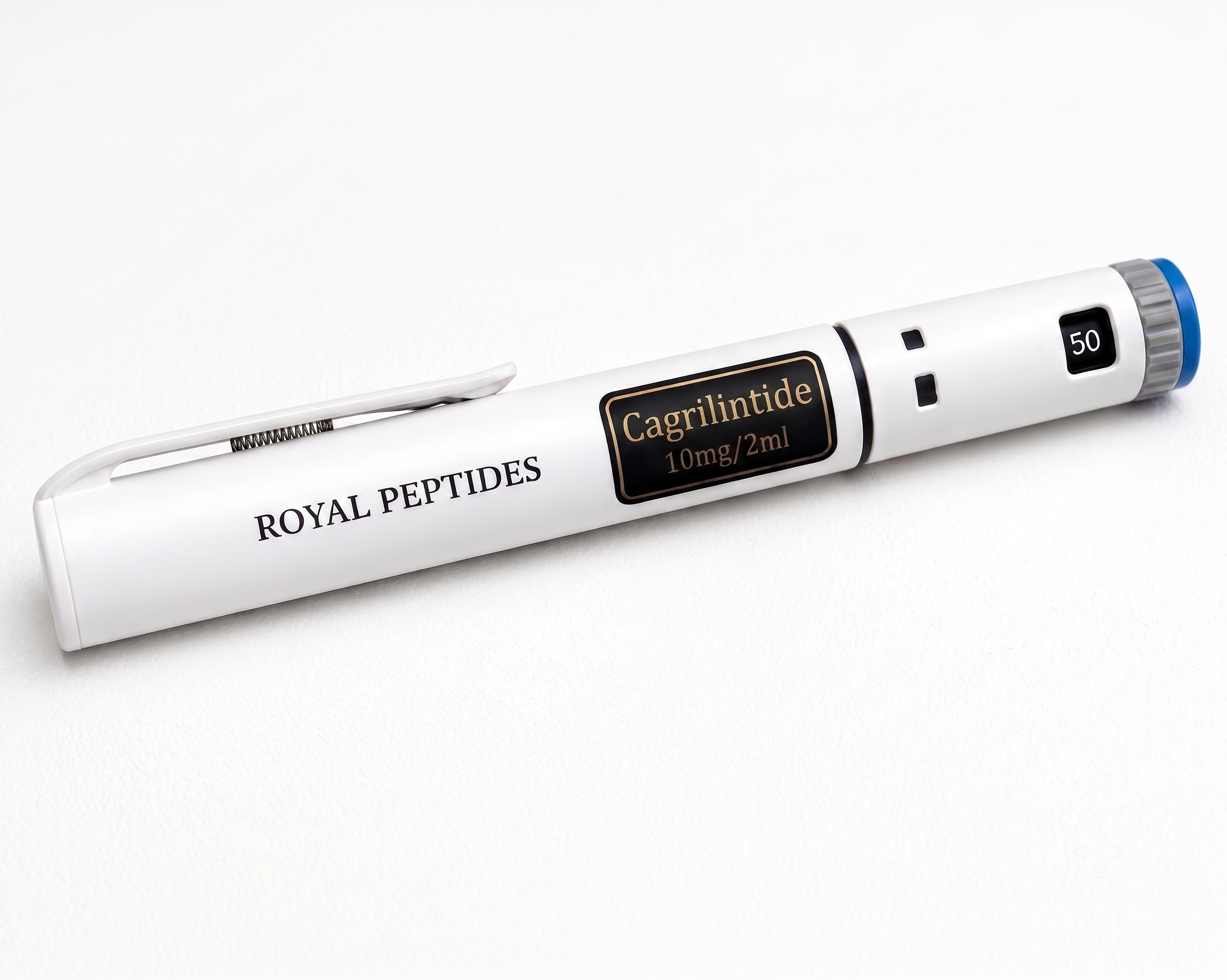
Cagrilintide – 10mg/2ml Dosing Pen (Long-Acting Amylin Analogue)
Cagrilintide represents the latest generation of synthetic peptide analogues of the naturally occurring hormone amylin, which is co-secreted with insulin by pancreatic beta cells in response to food intake. Unlike natural amylin, Cagrilintide has been chemically modified (containing a fatty acid attached to the peptide chain), which significantly prolongs its biological half-life in the body. In modern biomedical research focused on obesity and metabolic syndrome, this molecule is considered groundbreaking. It is being investigated for its unique centralized mechanism of body weight regulation, acting independently of the well-known incretin pathways (such as GLP-1 and GIP), thereby offering an entirely new perspective on addressing metabolic dysfunctions.
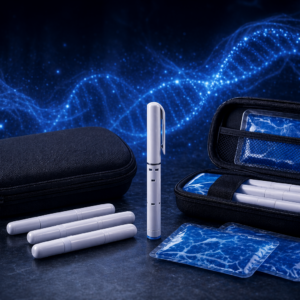
The dosing pen contains 10 mg of highly purified active compound in 2 ml of solution, corresponding to a concentration of exactly 5 mg/ml. For precise dosing within research protocols:
1 ml = 100 units (UI) = 100 clicks
0.5 ml (one full rotation of the mechanism) = 50 clicks
Examples of dosing for research purposes:
1 click = 0.05 mg (50 mcg) of active compound
2 clicks = 0.10 mg (100 mcg) of active compound
4 clicks = 0.20 mg (200 mcg) of active compound
10 clicks (0.1 ml) = 0.50 mg (500 mcg) of active compound
20 clicks (0.2 ml) = 1.00 mg (1000 mcg) of active compound
This mechanical system ensures absolute precision, repeatability, and flexibility when setting microdoses according to the requirements of a specific laboratory protocol without the need for complex manual dilution of lyophilized vials.
Research-Investigated Effects
The primary focus of Cagrilintide research is its potent activity within the central nervous system. The compound acts as a non-selective agonist of amylin (AMY1 through AMY3) and calcitonin receptors. These receptors are located in brain regions responsible for energy homeostasis (primarily the area postrema and nucleus tractus solitarii). Activation of this signaling pathway leads to a significant delay in gastric emptying and the generation of a strong neurogenic satiety signal.
In vivo research data suggest that Cagrilintide can induce significant reductions in adipose tissue. One of the most promising areas of ongoing research is its pronounced synergy with GLP-1 receptor agonists (such as Semaglutide). Since the amylin pathway regulates satiety through a neurological mechanism distinct from GLP-1, combined investigation of these two pathways demonstrates substantially greater reductions in caloric intake and improved metabolic optimization compared to either compound alone. Research is also evaluating its effects on suppressing glucagon secretion and improving overall cellular insulin sensitivity.
Scientific Background and References
Cagrilintide was developed by leading biomedical laboratories and has successfully completed Phase I and Phase II clinical trials, confirming its high efficacy and favorable safety profile. Scientific publications in respected medical journals, including The Lancet, provide detailed descriptions of its pharmacokinetics, stability, and dose-dependent effects on body weight reduction in studied subjects. These publications are fully accessible through the international PubMed database.
Comprehensive data from ongoing clinical research projects focused on long-term combination therapy using amylin analogues and incretin mimetics are collected within the international ClinicalTrials.gov registry, where this molecule serves as a key model for the development of future advanced therapies for obesity and type 2 diabetes.
The Royal Peptides dosing pen provides a modern, safe, and highly sterile solution for handling this advanced molecule under controlled laboratory conditions.
This product is intended exclusively for scientific and research purposes. Not for direct human consumption.
All products available in our offer are intended strictly for research, laboratory, and development purposes only. They are not intended for use as a medicinal product, medical device, cosmetic product, food, dietary supplement, or as an active substance intended for consumption or application in humans or animals.
These products are not approved for clinical use and must not be used for the diagnosis, treatment, or prevention of any disease.
By purchasing the product, the customer acknowledges and confirms understanding of its research nature and agrees to use it exclusively in accordance with this intended purpose.
The purchase of our products is permitted only to individuals over 18 years of age.
Product images are for illustrative purposes only. The actual appearance of the packaging may vary depending on the current batch.